The phone remote
Run the service from your hand.
Any phone or tablet on the church Wi-Fi can drive what is on the screen — the next verse, the next slide, the next item in the service. There is nothing to install on the phone. You scan a code and it is a remote.
These are photographs of the page as it really is. It is dark whichever way this site is set, because the person holding it is standing in a dim room next to people who are trying to worship.
Getting one paired
Three steps, about twenty seconds.
- In the app, open Remotes from the top bar. The first QR code is already on screen — nothing to click first.
- Point the phone’s camera at it and tap the link. If the camera will not cooperate, the address underneath can be typed by hand.
- That is it. The page is live, and the booth can see who is holding it.
Each phone gets its own four-digit code, so a remote can be taken away from one person without disturbing anybody else. Codes live on the church’s machine and never leave the building.
Add it to the home screen. The phone offers this from its browser menu, and it is worth doing: without the browser’s own bars the page fits the screen exactly, which is what it was drawn for.
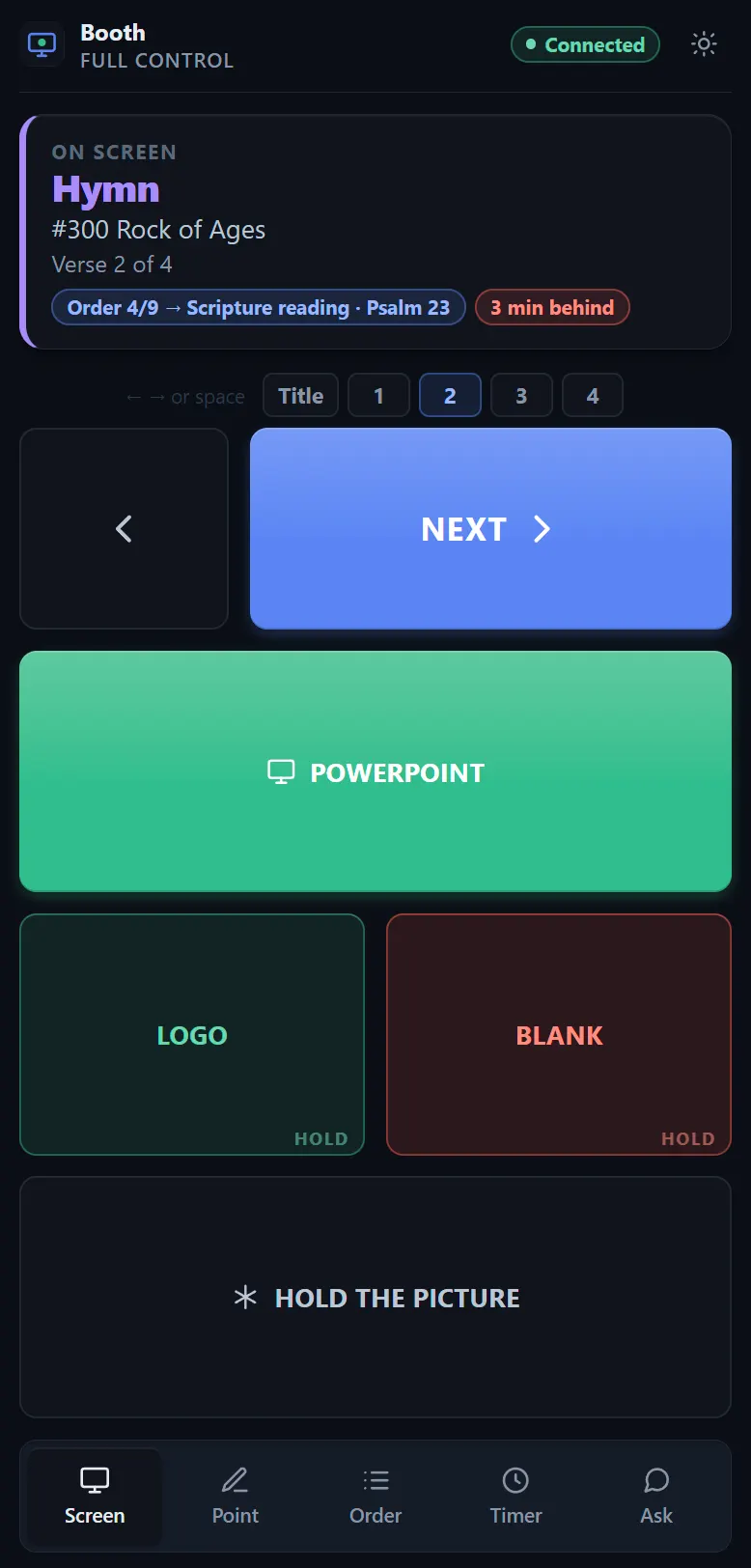
What is on the page
One screen. No scrolling, ever.
A remote is held in the dark, at arm’s length, by somebody who is also doing something else. So the page never scrolls and the buttons never move: whatever will not fit together is put behind a tab rather than stacked down a column.
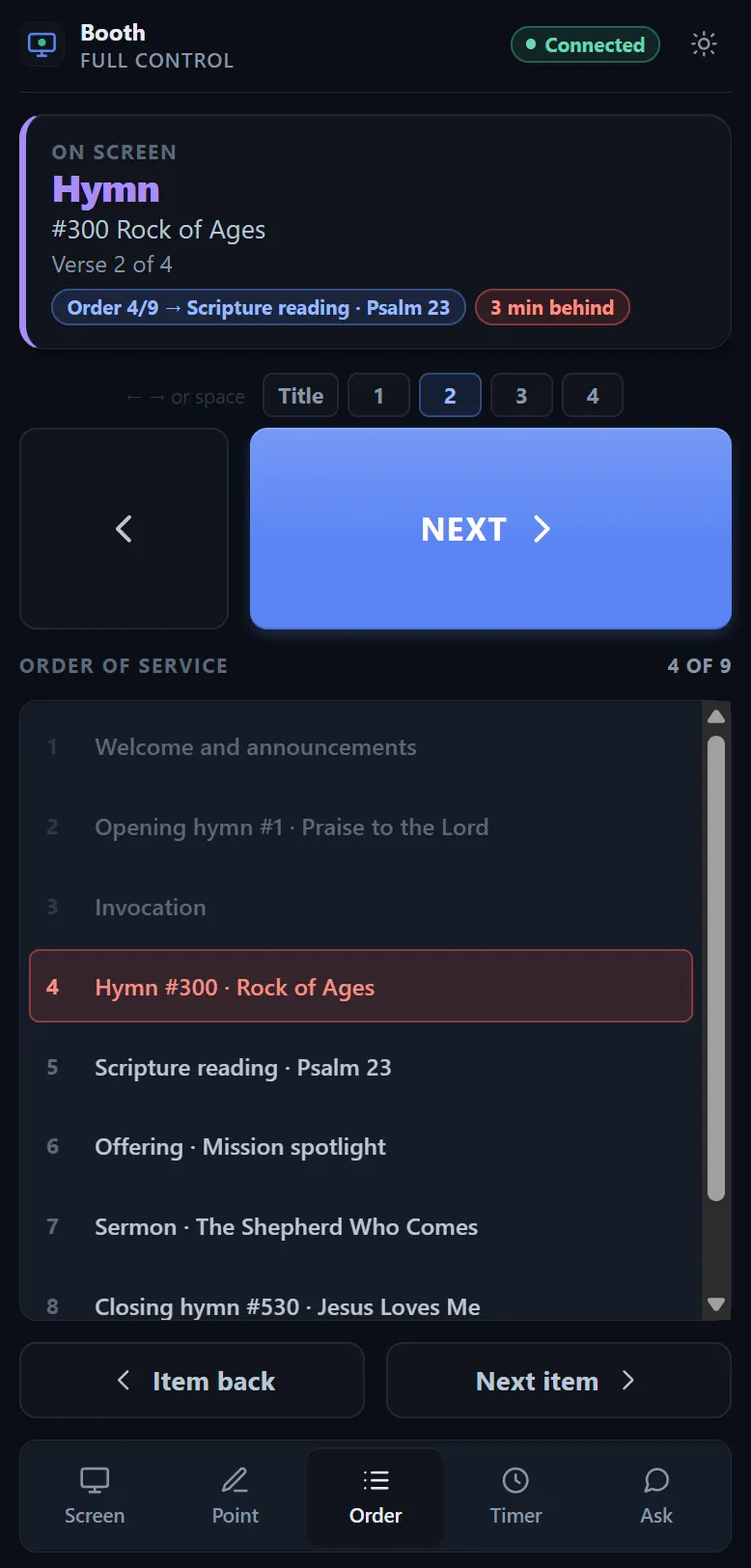
Order
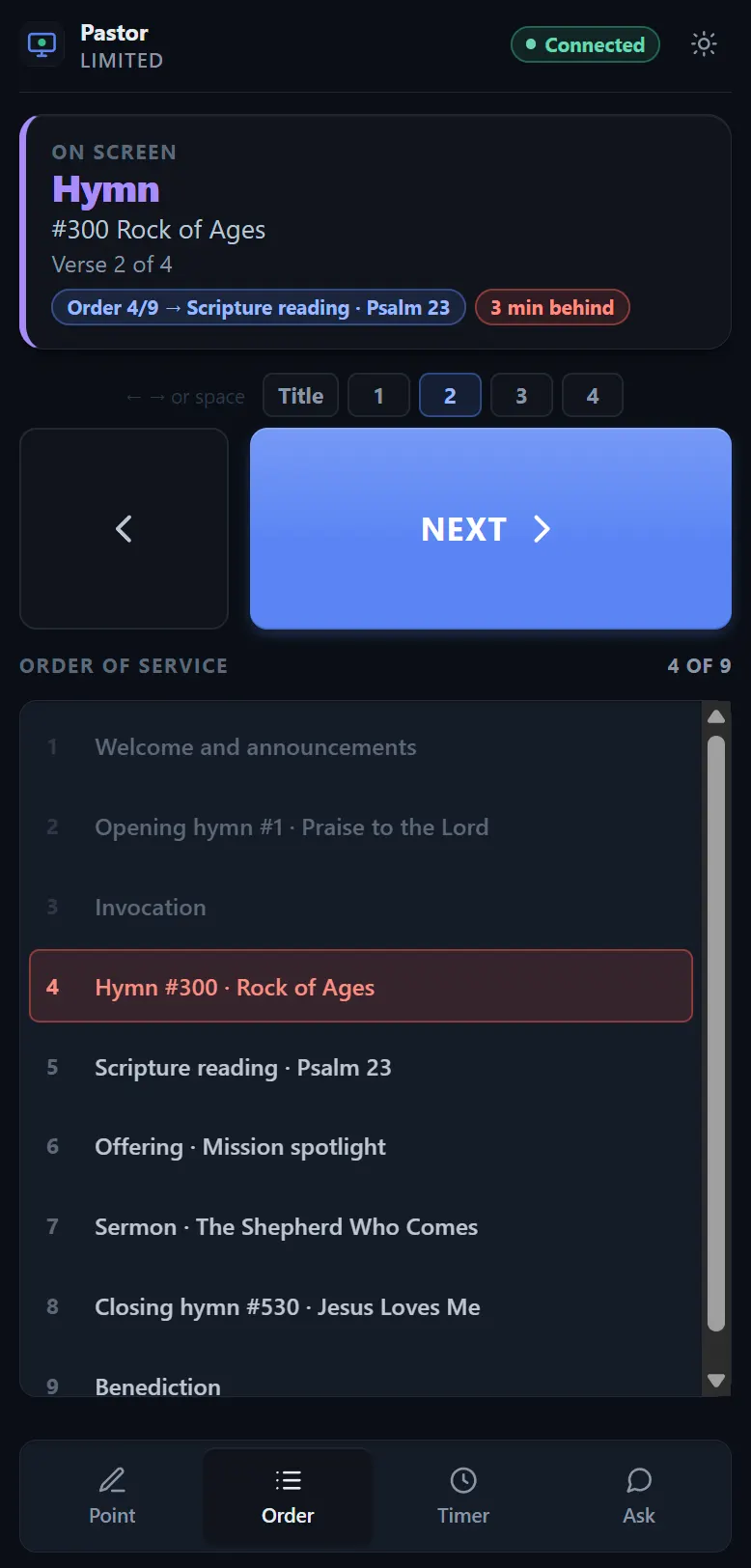
Every item in the service, with the live one marked. Tap one to go straight there rather than pressing NEXT past four things the congregation can see.
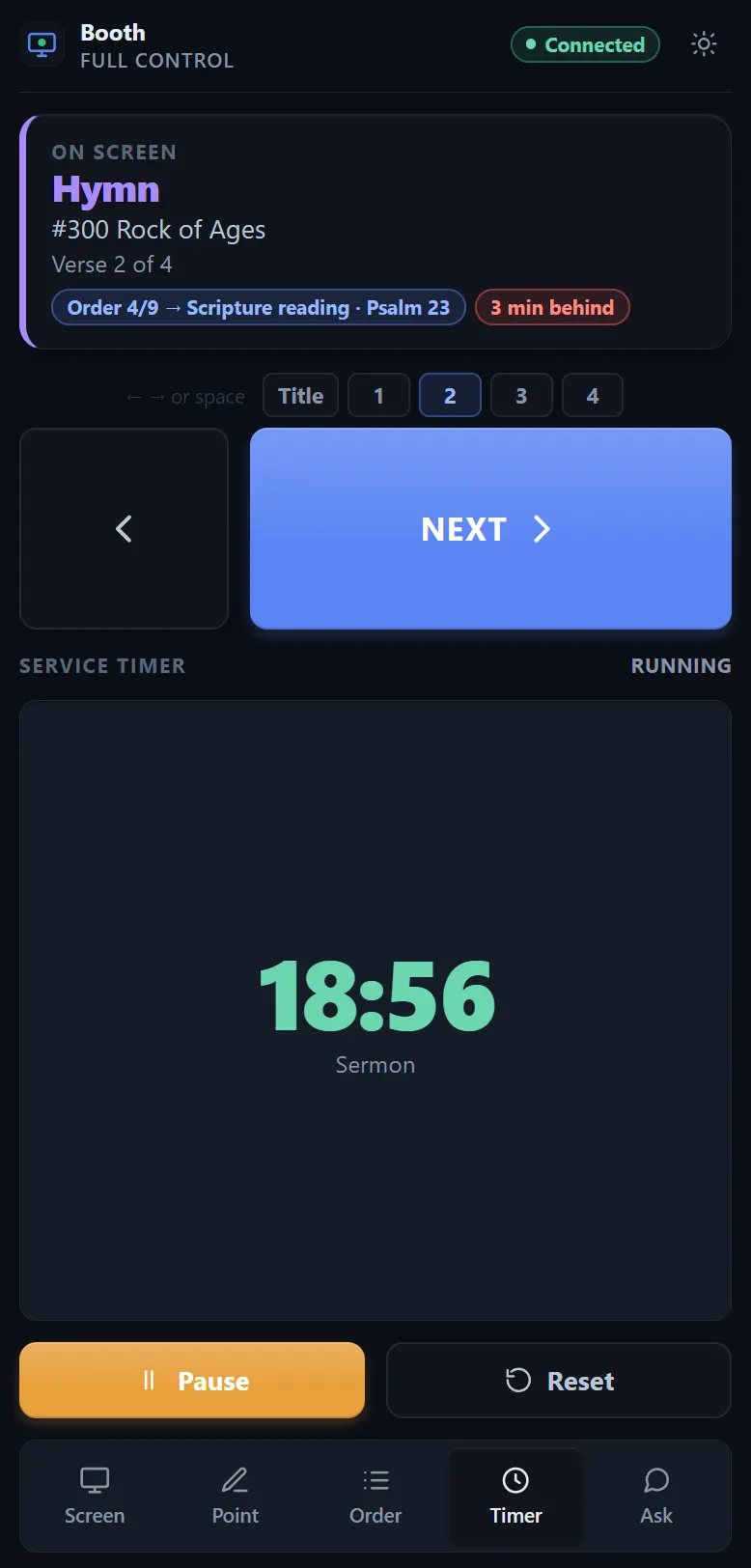
Timer
The same clock the platform monitor shows. The phone counts on its own, so a forty-minute countdown costs one message rather than thousands.
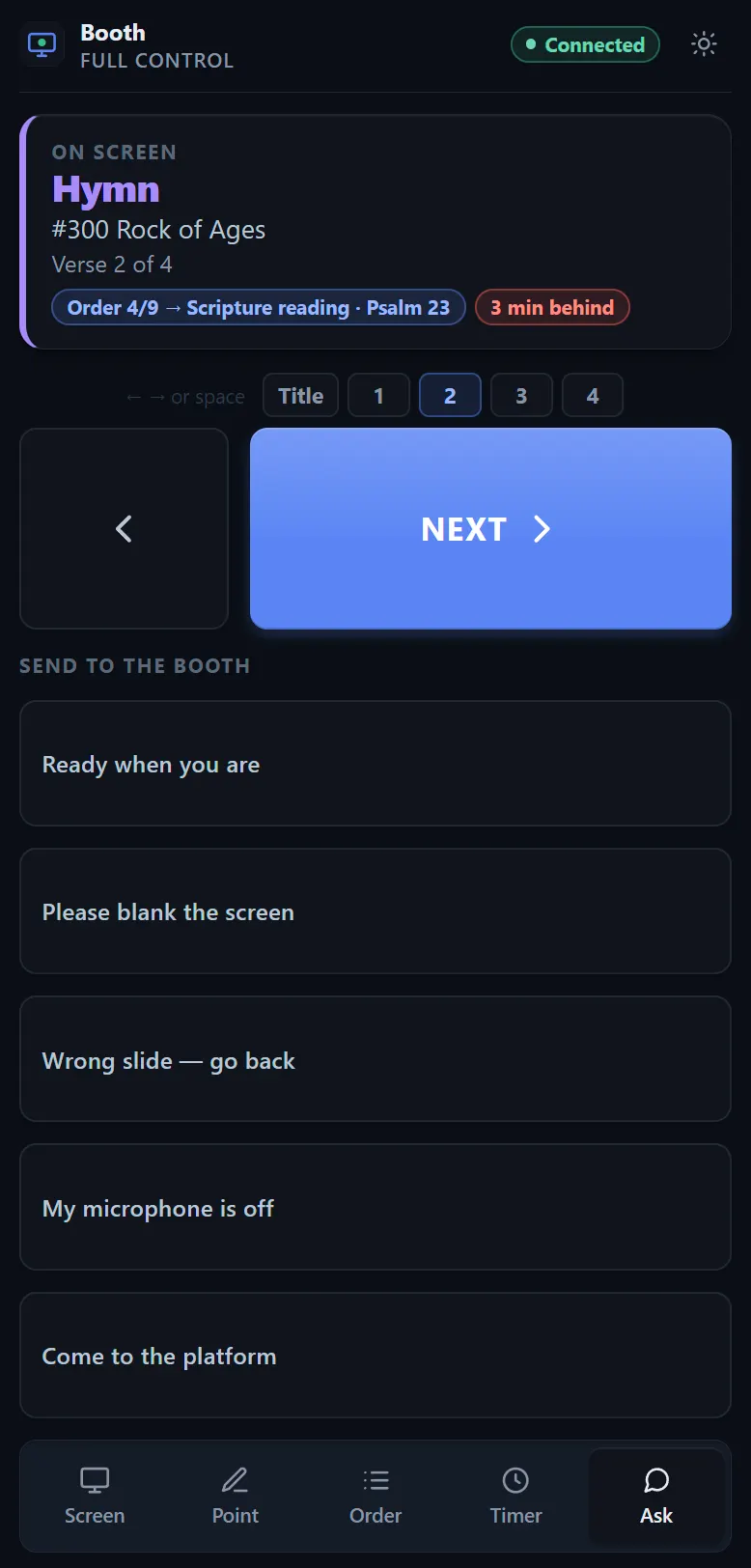
Ask
Five things to say to the booth. They arrive on the operator’s screen with your name on them.
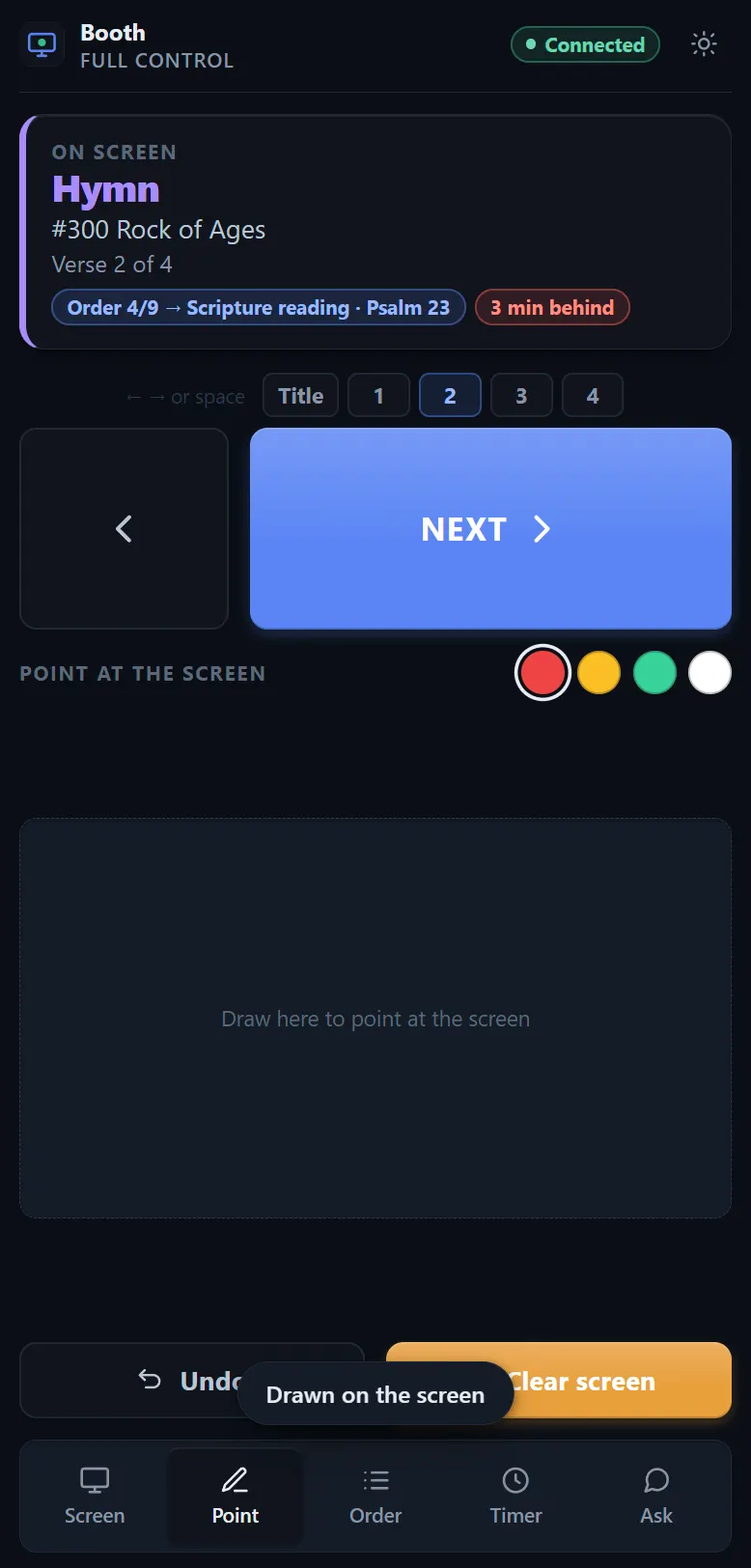
Point
Draw on the pad and the mark appears on the projector, in one of four colours. Undo takes back the last one; Clear takes them all.
Who gets which remote
A pastor’s remote cannot black out the church.
Give the booth a full remote and everyone else a limited one. A limited remote moves through what is already on screen and can point at it. It cannot change what kind of thing is up there — which matters most when it is in somebody’s pocket during the offering.
Jumping to a verse is on the limited list on purpose. It is navigation, not a change of mode: a preacher who wants verse four should not have to tap NEXT three times while the congregation watches verses two and three go past.
From the booth
The conversation goes both ways.
A remote used to be a one-way thing: the phone drove the service and the room it was being driven from could say nothing back except by walking over. The booth now has two answers, and neither of them unpairs anybody.
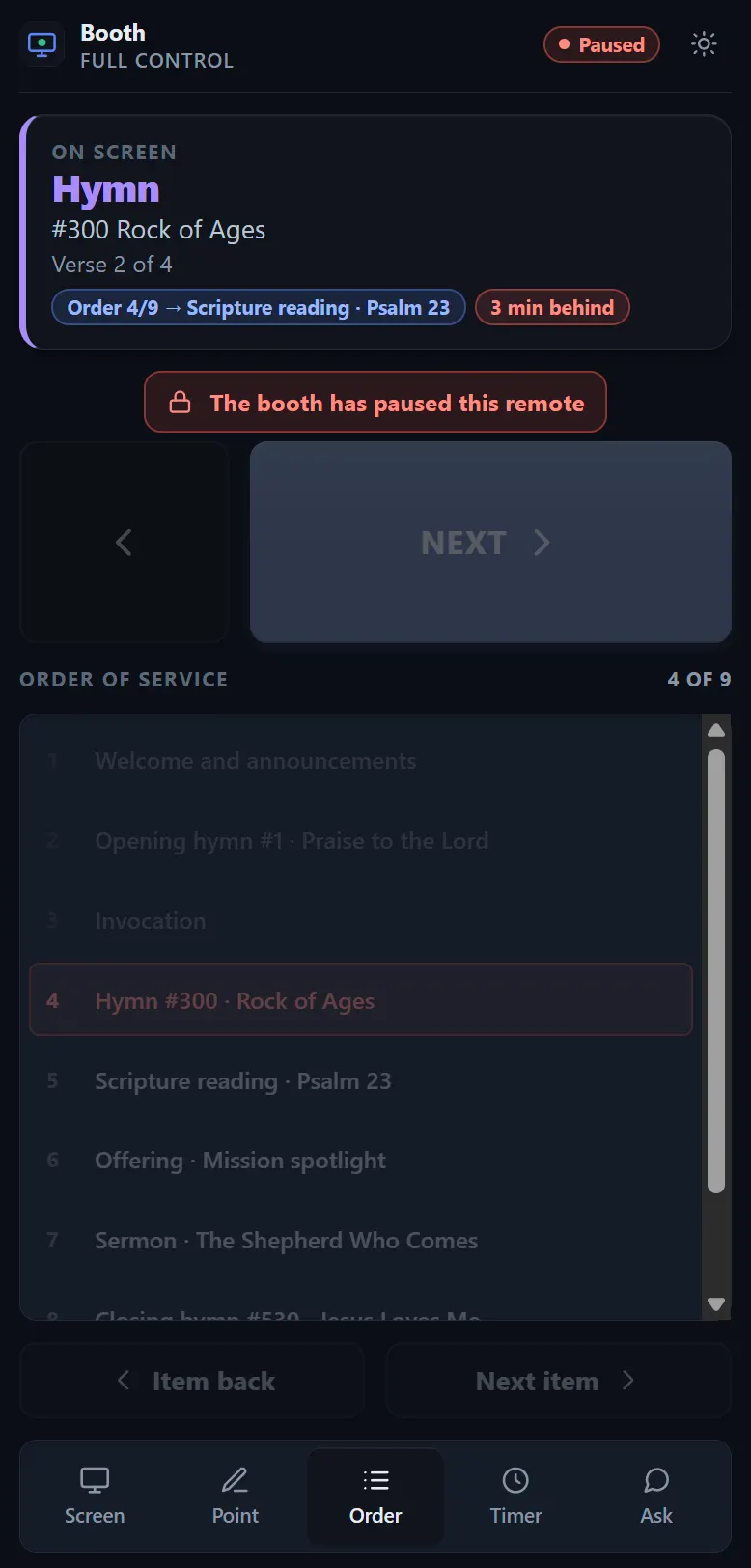
Pause
Takes the buttons away without disconnecting anything. The phone stays paired and keeps showing what is on the projector — it simply cannot act.
For a guest speaker holding a remote through the offering, or a phone left on a pew. Handing control back is one tap in the booth, with nothing to re-scan and nothing to explain.
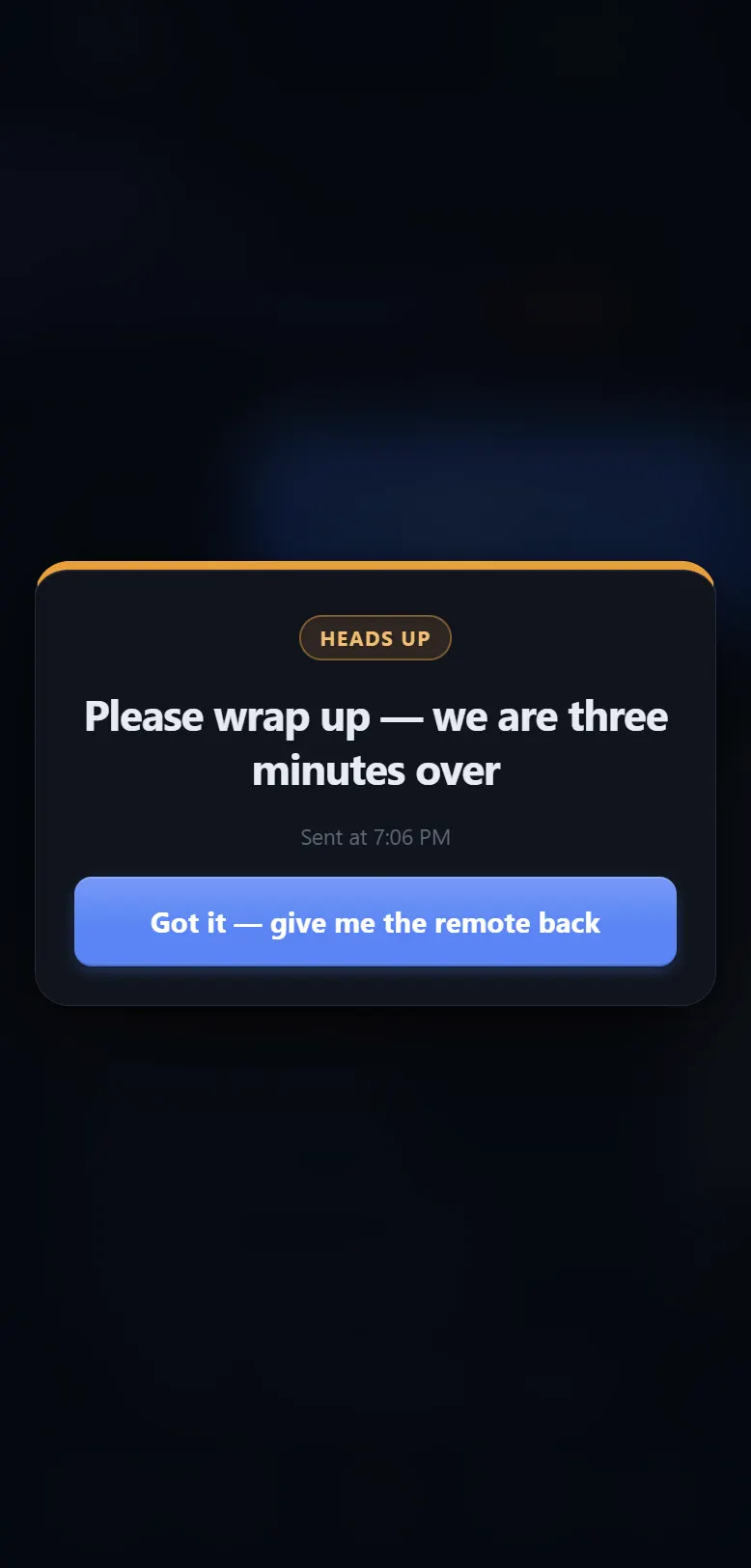
A note on the screen
Covers the page and holds the phone until it is dismissed — and dismissing hands the remote straight back. Nothing is revoked by a message.
Five presets are one tap: Please wrap up, Two minutes left, Hold — we are not ready. The booth is told when it was read, and one press sends the same note to every phone at once.
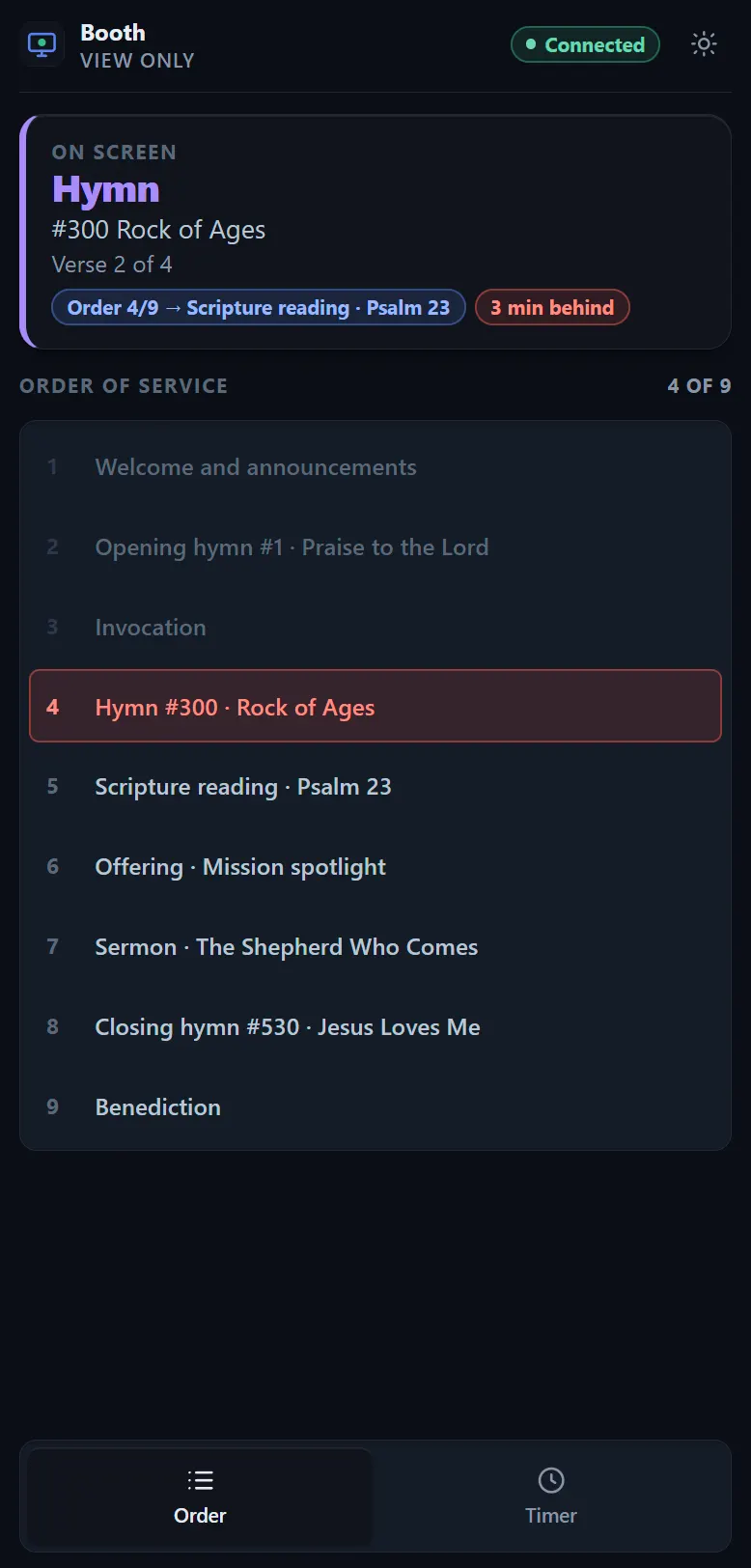
The watch-only address
Safe to hand anybody.
Add /view to the end of a remote’s address — there is a copy button for it beside each one in the app — and you get the same picture with no buttons at all.
It is the right thing for a deacon at the back who needs to know where the service is up to, for the sound desk, or for anyone who should be able to see but not touch.
Worth knowing before Sabbath
The rest of it is in the manual.
Sections 44 and 45 cover phone remotes and pointing at the screen in full — and the whole book is inside the app, searchable, with no network needed.